▷ 6 sec video
Air & water
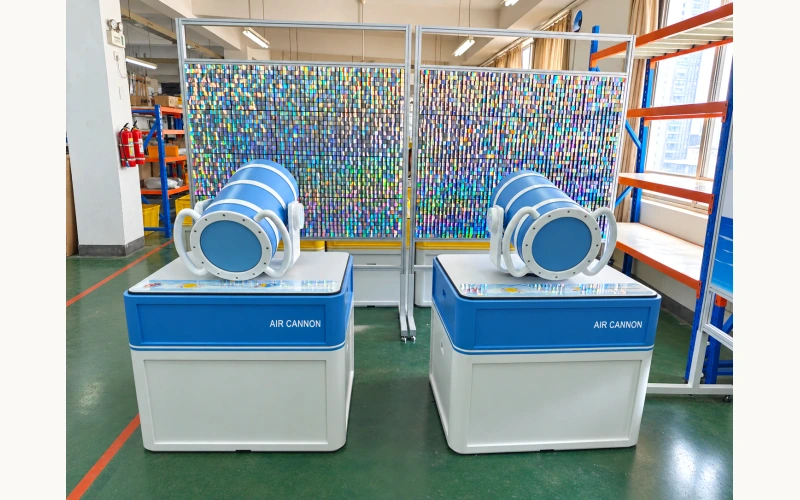
Air vortex cannon exhibit
Aim the barrel and tap its rear membrane to observe the response of target tiles across the display.
Enhanced photograph · Real operating video

SCHOOL SCIENCE CORNERS · CORRIDORS · CAMPUS GALLERIES
Hands-on STEM exhibits for school science corners, corridors and campus galleries. Explore real products, watch operating videos and plan a collection around your students and space.
EXPLORE BY SCIENCE
Browse catalogue designs and physical exhibit references by science topic. Open each product for the activity, image views and practical details; video types are clearly labelled.
Explore mechanisms, waves, flight and mathematics.
Browse the 73 exhibit design references1–24 of 317 exhibits
Product references · Labelled videos where available▷ 6 sec video
Air & water
Aim the barrel and tap its rear membrane to observe the response of target tiles across the display.
Enhanced photograph · Real operating video
▷ 18 sec video
Air & water
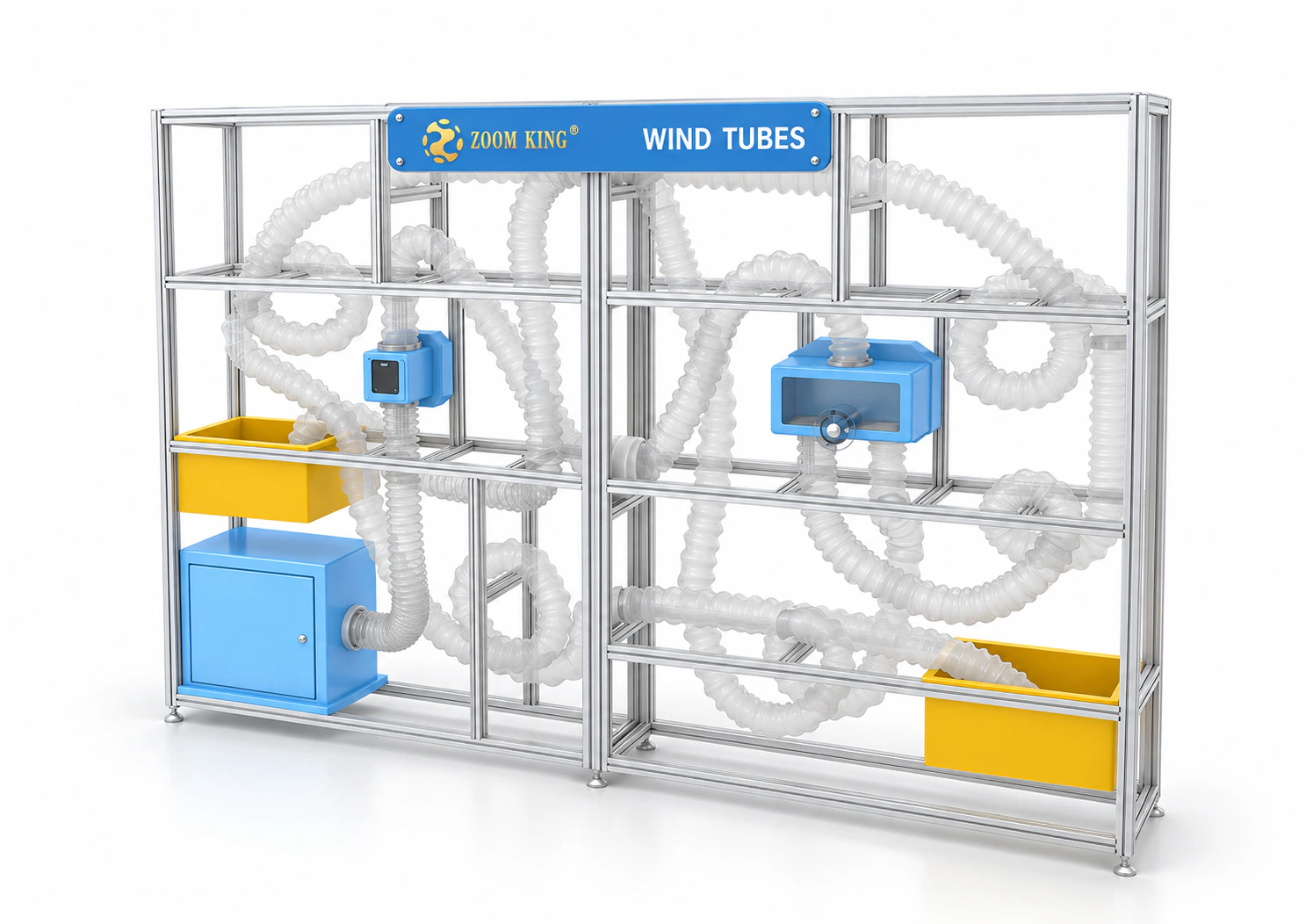
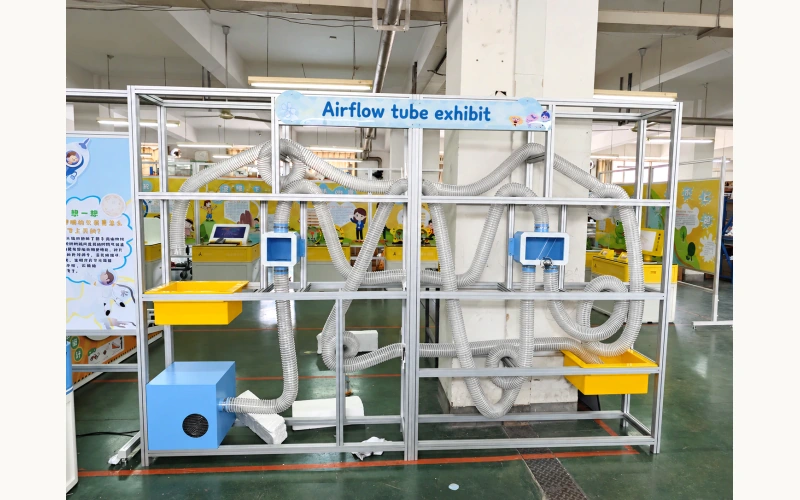
Use the loading boxes and handwheel, then follow the activity through clear ductwork toward the collection area.
Enhanced photograph · Real operating video
▷ 0:17 video
Mechanisms & engineering
Turn the handwheels and compare how butterfly markers climb along the three vertical cord paths.
Product photograph · Real operating video
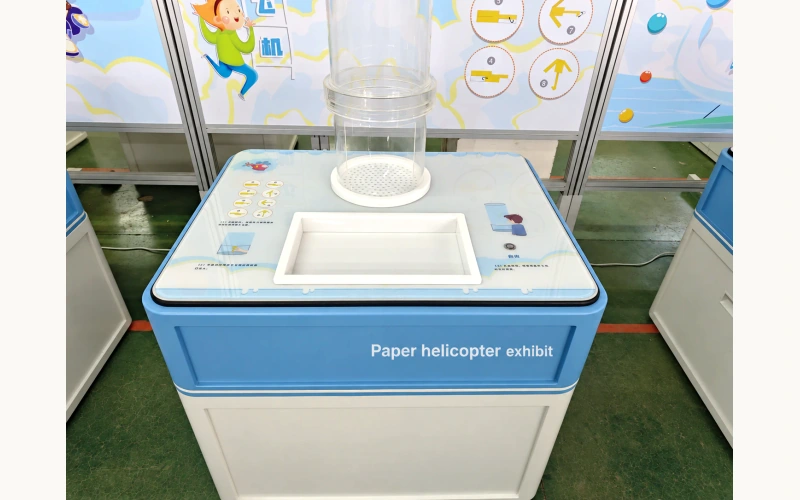
▷ 7 sec video
Forces & motion
Place a prepared paper piece inside a transparent wind tube and observe its movement during the guided airflow activity.
Enhanced photograph · Real operating video
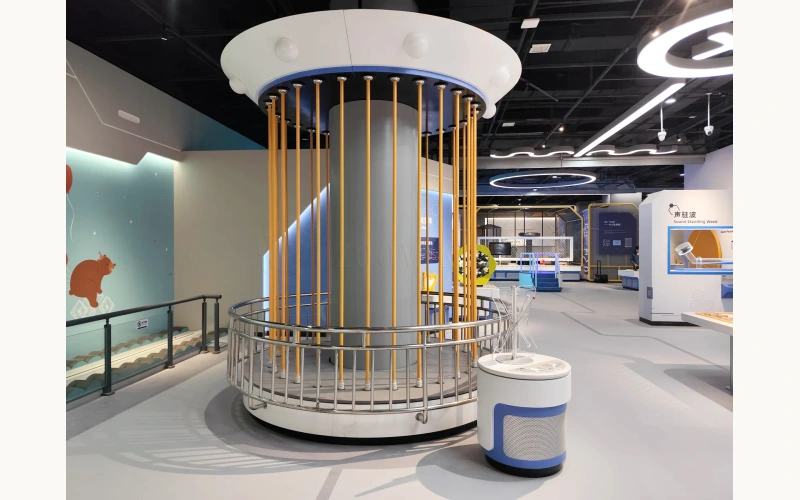
▷ 18 sec 3D preview
Mathematics & geometry
A straight moving element and curved slit demonstrate a surprising relationship between motion and geometry.
Product photograph · 3D model preview
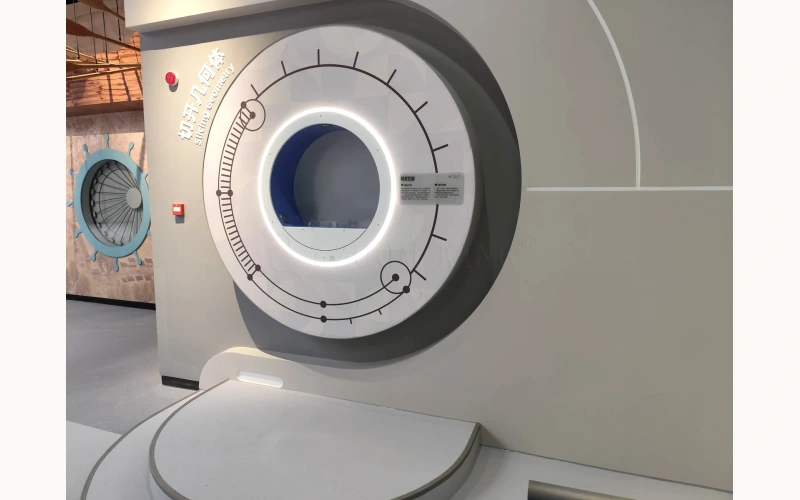
▷ 18 sec 3D preview
Mathematics & geometry
A collection of geometric forms invites visitors to explore shapes produced by cutting through solids.
Product photograph · 3D model preview
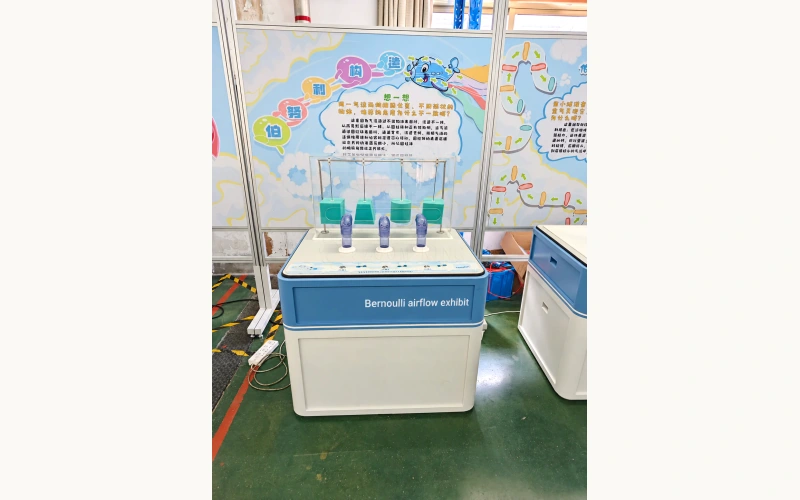
▷ 17 sec video
Air & water
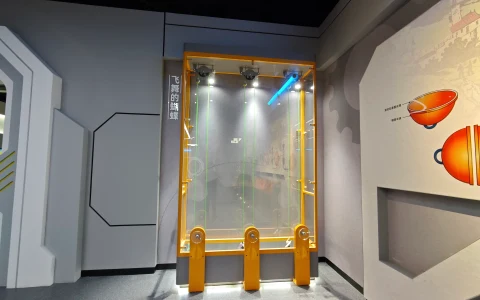
Operate the front controls and compare how suspended shapes respond above the three transparent air outlets in this airflow exhibit.
Enhanced photograph · Real operating video
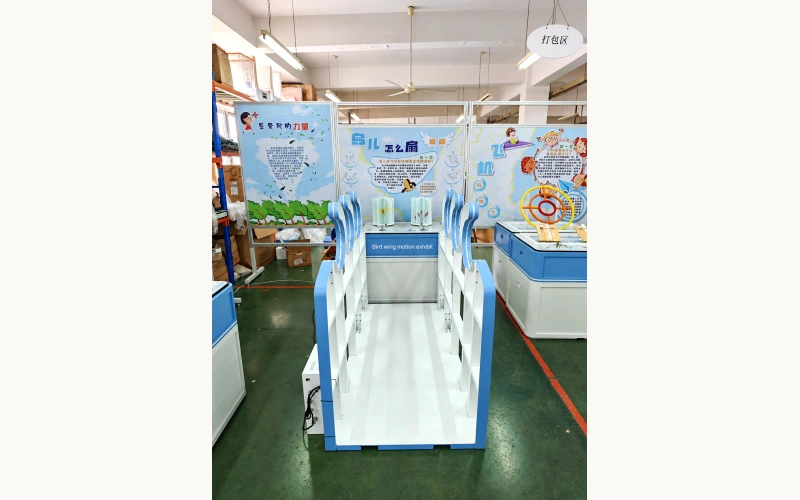
▷ 13 sec video
Forces & motion
Follow wave-shaped handrails along a platform, then turn illustrated drums to observe a sequence of bird-wing images.
Enhanced photograph · Real operating video
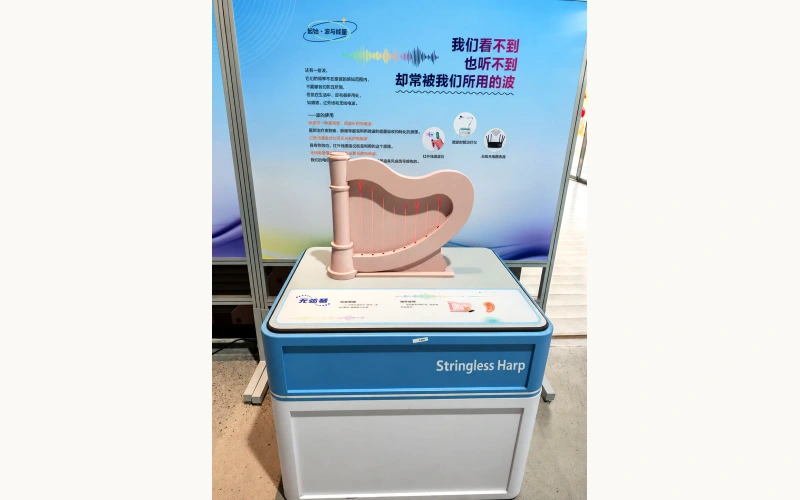
▷ 13 sec video
Sound & vibration
A harp-shaped exhibit responds to hands moving through its invisible strings for science galleries and learning spaces.
Enhanced photograph · Real operating video
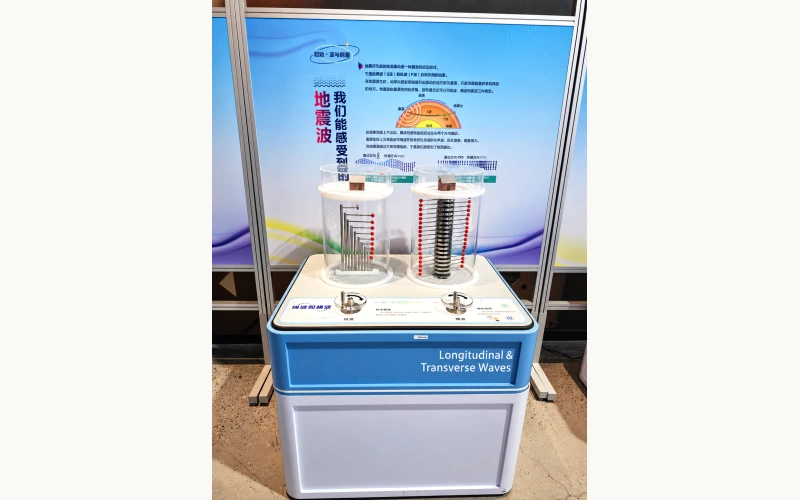
▷ 34 sec video
Sound & vibration
Two mechanisms demonstrate the relationship between vibration direction and wave travel for science galleries and learning spaces.
Enhanced photograph · Real operating video
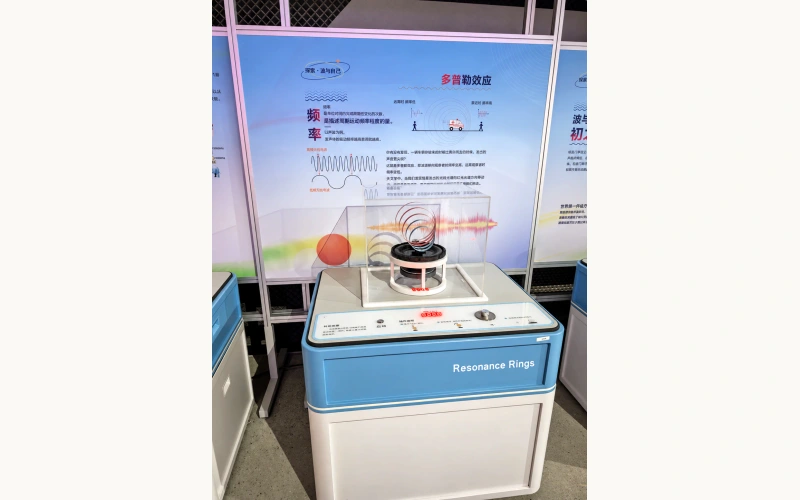
▷ 60 sec video
Sound & vibration
A variable-frequency drive excites rings so visitors can compare their vibration response for science galleries and learning spaces.
Enhanced photograph · Real operating video
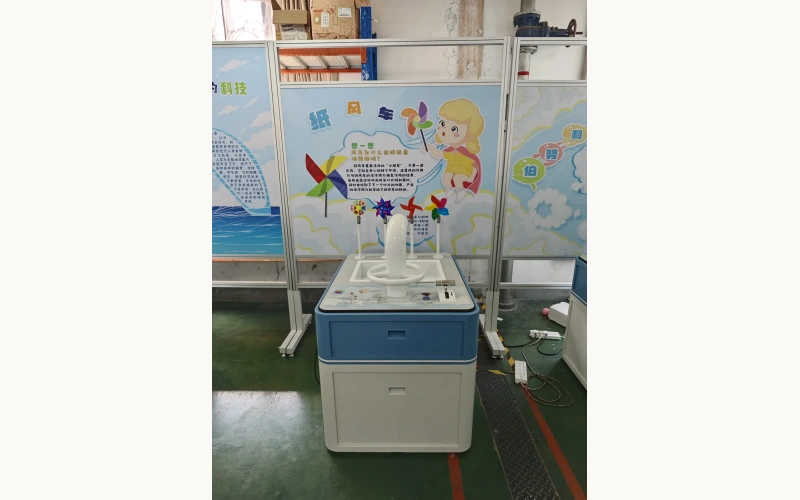
▷ 20 sec video
Air & water
Position a paper pinwheel near the curved air outlet and compare how its rotation changes at different positions.
Product photograph · Real operating video
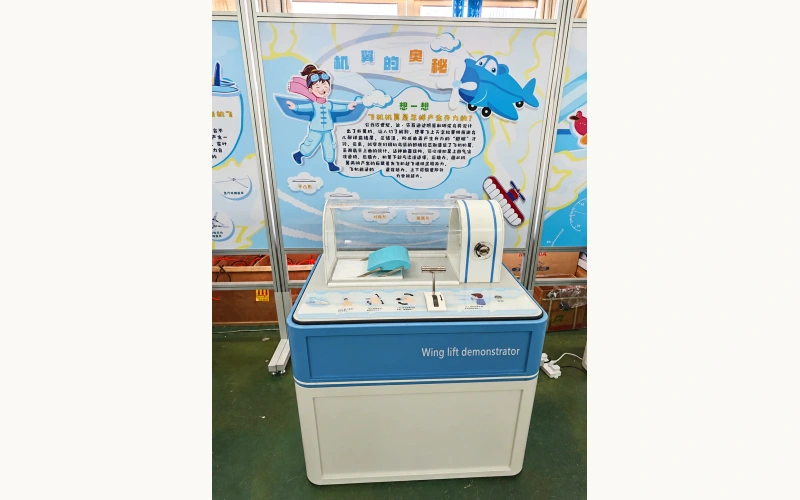
▷ 18 sec video
Forces & motion
Operate the front control and observe a curved wing inside a transparent airflow enclosure, with its supporting linkages visible.
Enhanced photograph · Real operating video
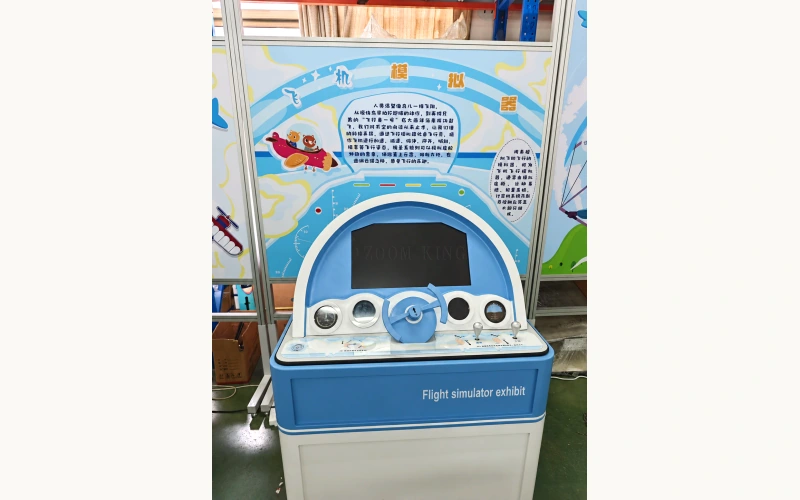
▷ 18 sec video
Forces & motion
Use a physical control yoke and levers to explore how control inputs change the aircraft view on an integrated screen.
Enhanced photograph · Real operating video
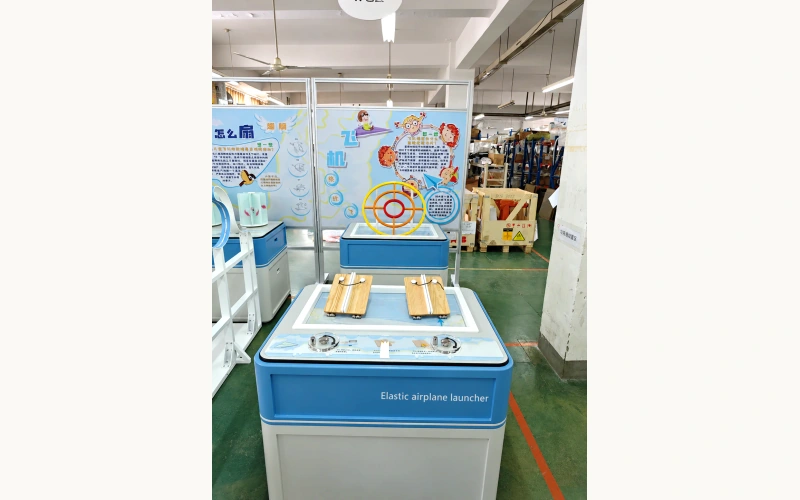
▷ 14 sec video
Forces & motion
Load a model airplane onto an elastic launch ramp and observe its flight toward the separate ring target.
Enhanced photograph · Real operating video
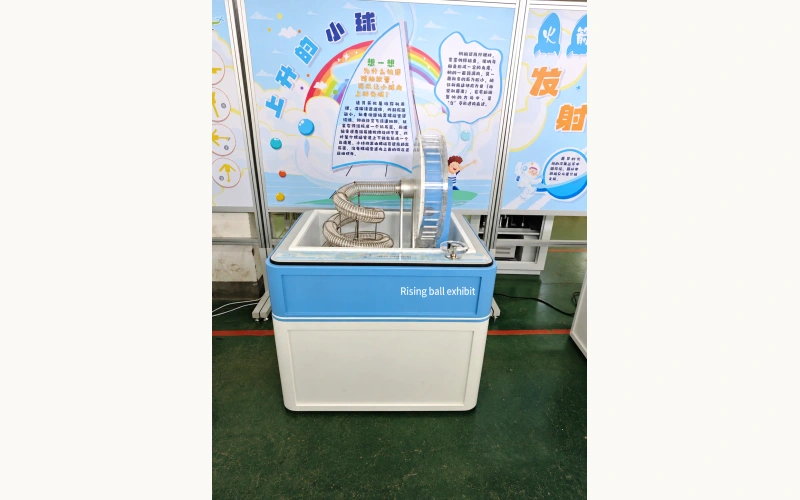
▷ 18 sec video
Forces & motion
Turn the front handwheel and observe the relationship between a large rotating wheel and the connected transparent spiral tube.
Enhanced photograph · Real operating video
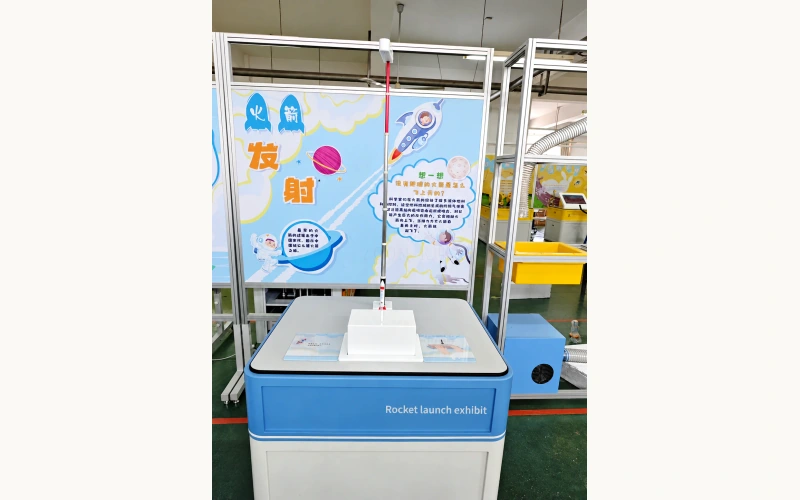
▷ 3.4 sec video
Forces & motion
Press the operating block and follow a small rocket as it moves along its vertical guide during the demonstration.
Enhanced photograph · Real operating video
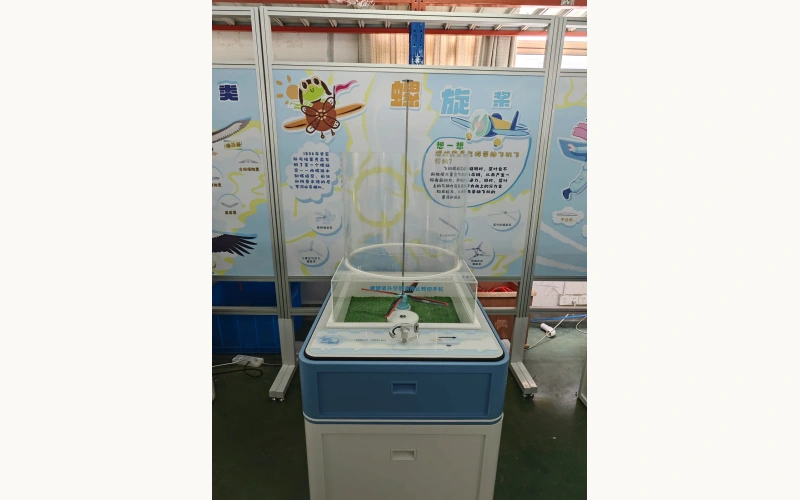
▷ 14 sec video
Forces & motion
Turn a handwheel and observe the visible drive components and propeller inside a transparent cylinder around a central guide.
Product photograph · Real operating video
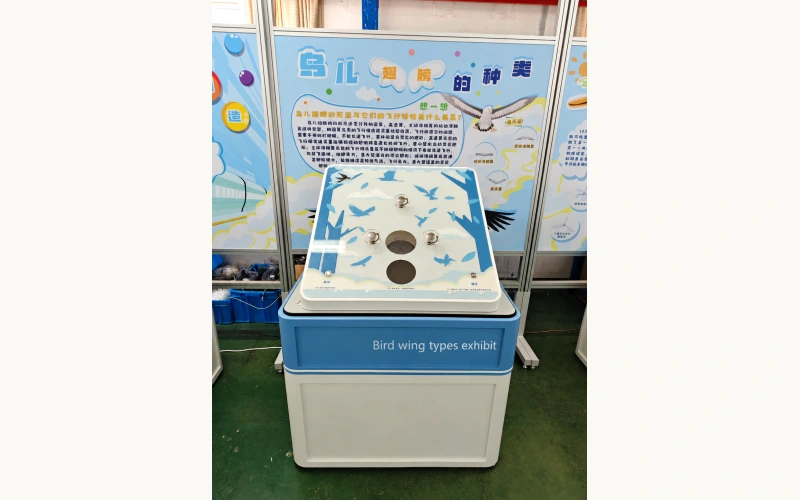
▷ 19 sec video
Forces & motion
Use physical selectors to choose bird-wing information, then compare the illustrated content shown through two circular viewing windows.
Enhanced photograph · Real operating video
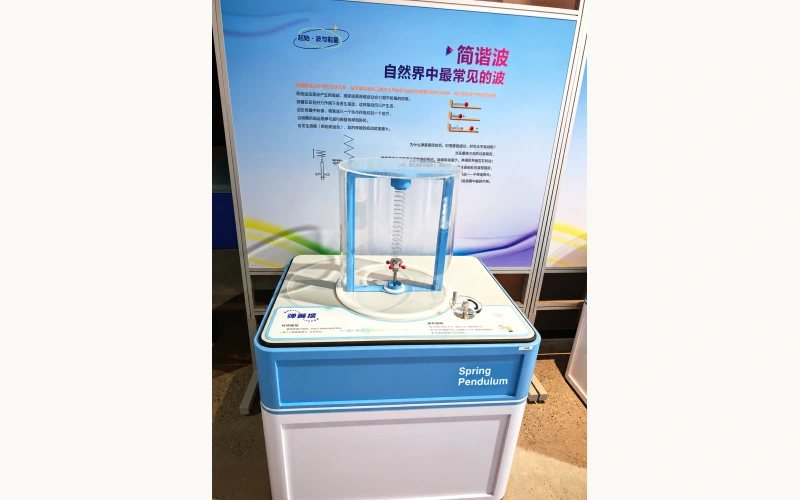
▷ 42 sec video
Forces & motion
A suspended mass and spring demonstrate changing patterns of oscillation for science galleries and learning spaces.
Enhanced photograph · Real operating video
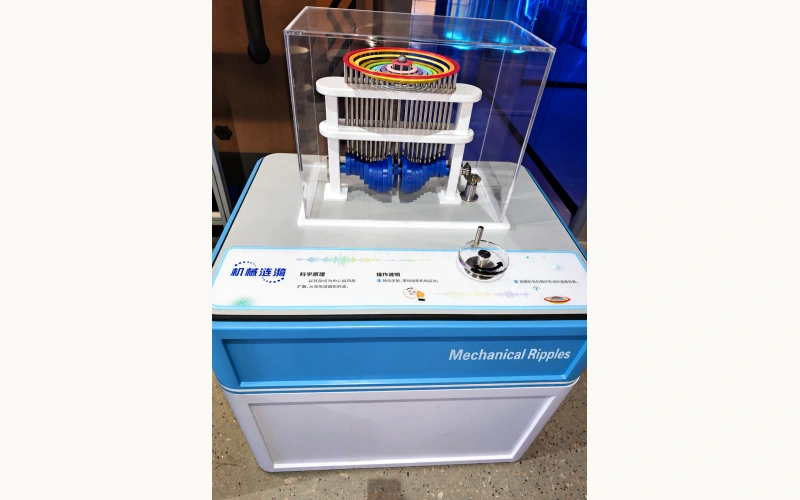
▷ 21 sec video
Mechanisms & engineering
Hand-driven gears lift concentric rings in sequence to form a moving ripple pattern for science galleries and learning spaces.
Enhanced photograph · Real operating video
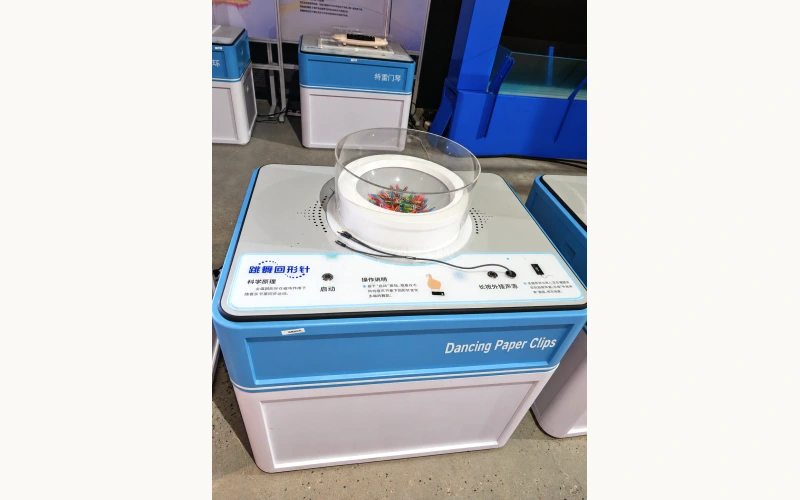
▷ 44 sec video
Electricity & magnetism
Paper clips move with the changing musical signal in an electromagnetic demonstration for science galleries and learning spaces.
Enhanced photograph · Real operating video
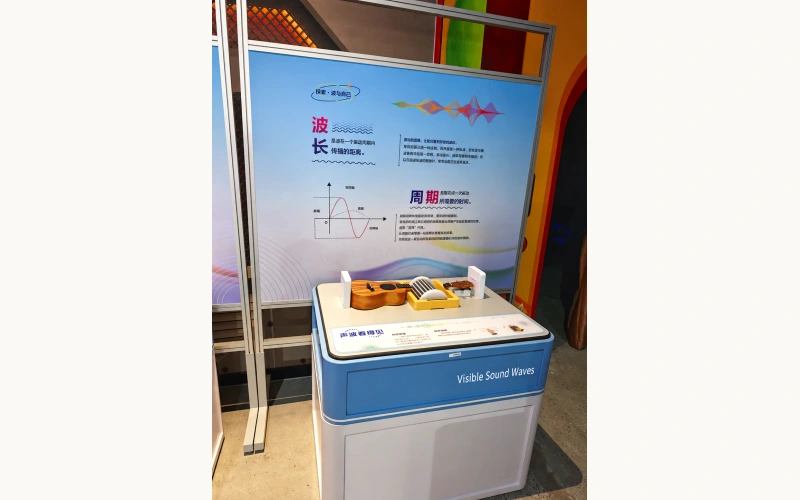
▷ 17 sec video
Sound & vibration
Guitar strings are viewed against a rotating striped drum to make their vibration easier to observe.
Enhanced photograph · Real operating video
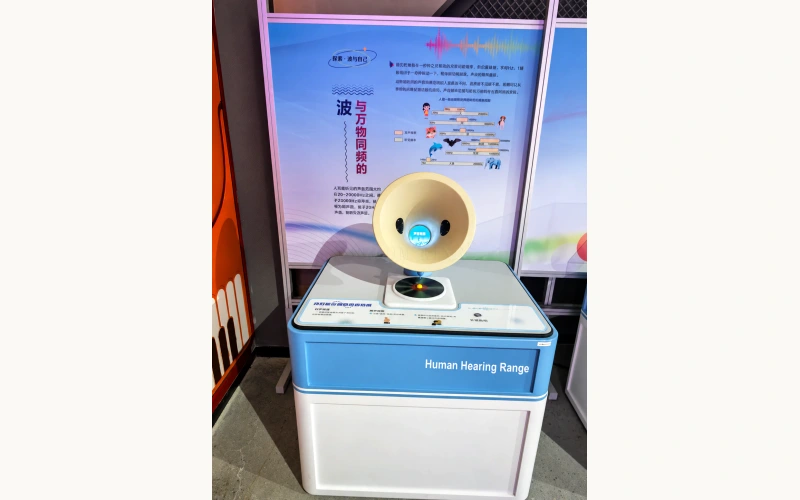
▷ 39 sec video
Sound & vibration
An interactive sound-frequency exhibit lets visitors explore when a changing tone becomes inaudible for science galleries and learning spaces.
Enhanced photograph · Real operating video
No matching exhibits. Try another name or choose all categories.
Building a collection around a different science theme?
Discuss your exhibit listFROM INDIVIDUAL EXHIBITS TO A SCIENCE SPACE
Combine compact stations, interpretation panels and larger activities around a shared theme. This concept layout is a starting point for a school gallery, science corner or travelling display.
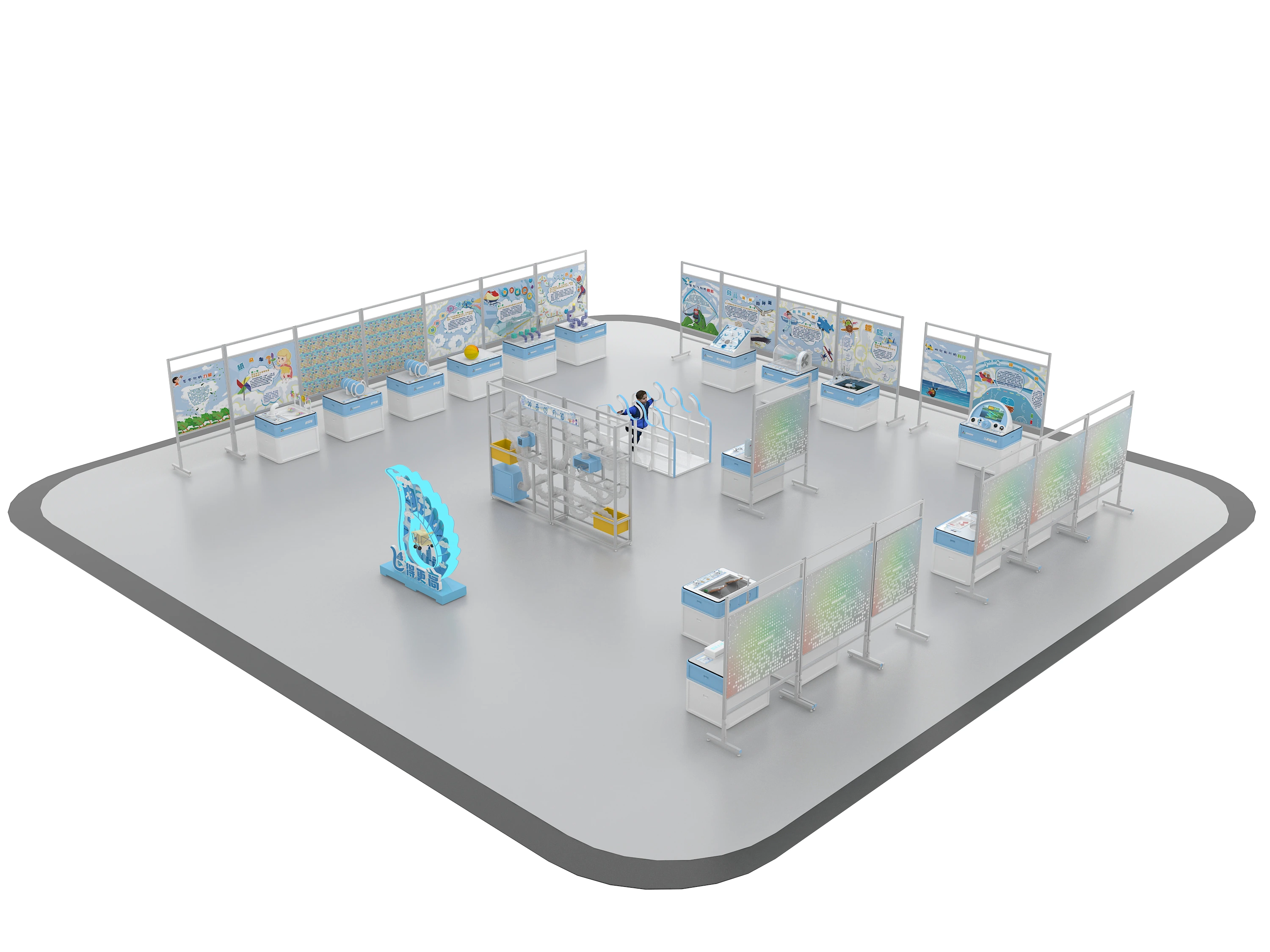
Bring air, forces, flight and bird-wing activities together. Choose the individual stations around the visitors and the discoveries you want to introduce.
Discuss how groups approach each station, move between activities and see a demonstration. Allow for launch directions and larger interactive structures.
Share the room outline, ceiling height, access route and power locations. Exhibit quantities, operating positions and service access are agreed for your site.
Have a room or an exhibit list in mind?
Plan a collection for your spaceSTART WITH THE SPACE
Define how students will use the space before choosing the exhibits. A compact starting point and a larger shared gallery need different briefs.
Start with a small group of physical science exhibits. Define the available floor or wall area, student activity and supervision.
Plan short interactions along a shared route. Discuss clear circulation, readable explanations and access to the moving or electrical parts.
Bring individual stations and a larger focal installation into one learning space, with a clear route and room for student groups.
DIRECTIONS FOR YOUR EXHIBIT BRIEF
These topics help frame the discussion. The specific stations, activities and interpretation are developed for the students and the site.
Begin with an observable movement, a track or a mechanical system. Define what students change and what they can compare.
Discuss a visible optical effect and the viewing conditions needed to make the interaction understandable.
Define the concept, the intended controls and the operating conditions before selecting a physical demonstration.
Use shapes, paths or physical models as a starting point. Discuss the task students should complete or investigate.
Have a reference exhibit or an idea for a student activity?
Talk through the practical options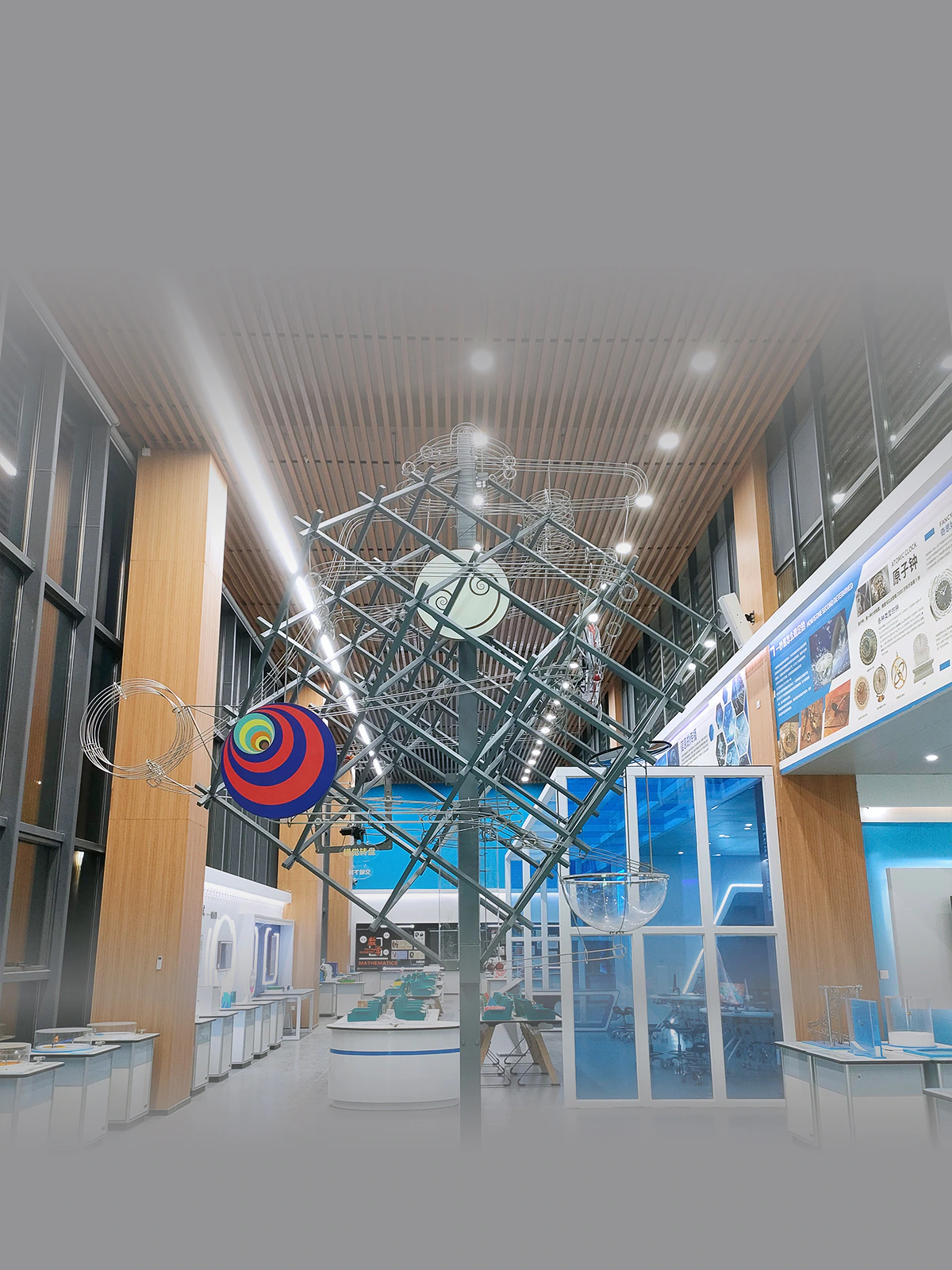
A SCHOOL-GALLERY REFERENCE
A tall rail-and-frame installation forms the focal point of this school-science gallery. Front and opposite-angle photographs show its relationship to smaller stations; the matching workshop clip documents the physical structure before the gallery setting.
Explore the photographed setting Browse other project referencesFROM IDEA TO AN AGREED SCOPE
We bring design, mechanical and control engineering, fabrication and installation into the discussion. Define what the school needs before a quotation.
Explore design & delivery 24-month spare-parts supportBEFORE YOU START
Yes. Start the discussion with the available space, student activity and the science topics you want to introduce. The exhibit selection and feasible scope are developed around that brief.
No. A floor plan, reference image or description of the intended student activity is enough to begin discussing the practical scope.
The final dimensions, controls, protection and installation arrangement are agreed for the intended users and the site. A reference photograph alone does not define a specification.
FROM CONCEPT TO TURNKEY DELIVERY
Tell us the student age range, available space and the activities you want to introduce. A sketch or reference photograph can start the discussion.