EXHIBIT ENGINEERS · ZIGONG, CHINA
Carbon structures museum exhibit — actual physical exhibit reference photograph

Fundamental Science

Carbon structures museum exhibit

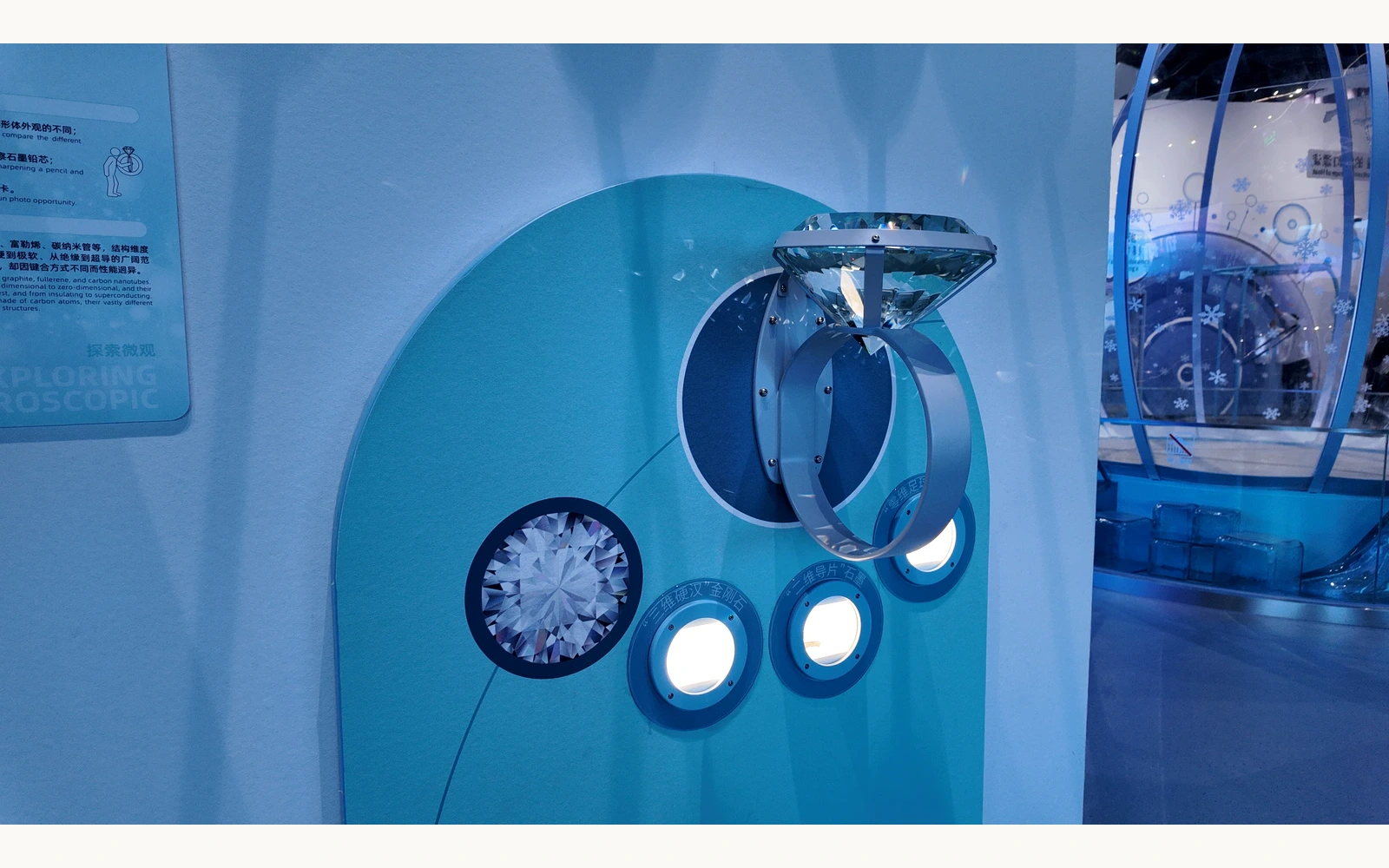
A curved wall with molecular-style forms, illuminated viewing points and hand controls introduces carbon structures and properties through a physical museum materials science display for visitors.

▶ Watch the film
19 sec · Real operating video

THE PRODUCT IN MOTION

See it work.

View the matched physical reference for carbon structures museum exhibit. The sequence documents the real exhibit setting and visible activity; the web edit is silent.

Video & text guide

THE ACTIVITY & MECHANISM

Compare representations of carbon structures

Linked-sphere forms and viewing points create a physical reference for comparing carbon structures. Screen or panel interpretation can explain how different atomic arrangements relate to different material properties. The large spheres are symbols for atoms; any real samples, conductivity comparisons or hardness tests require their own documented configuration.

  1. 01

    Explore

    Use the front control as directed and inspect the viewing points.

  2. 02

    Observe

    Compare the structural representations identified by the labels.

  3. 03

    Discuss

    Discuss how bonding and arrangement can change a carbon material’s properties.

REFERENCE & PROJECT SCOPE

Reference specifications.

Use the reference dimensions and operating information to plan the exhibit. The agreed project drawings define the supplied configuration, installation interfaces and service access.

Approx. L × W × H
3,300 × 1,500 × 3,500 mm
Exhibit theme
Fundamental Science
Visitor activity
Explore · Observe · Discuss
Reference operation
Use the wall-station control and compare the linked-sphere forms, pencil model, and circular viewing details.
Power & supply
Powered versions can be configured for 110/220 V AC, 50/60 Hz. The reference combines wall-mounted models with a floor-supported pencil/platform element. Coordinate the separate supports, service access, and electrical route.
Reference construction
The matching drawing identifies a 3D-printed carbon-atom model; the print feedstock and main wall/cabinet finishes remain unspecified.
Configuration options
Appearance, interpretation language, controls and installation arrangement by project agreement
Daily operating schedule
8 hours per day
Scheduled maintenance
Every 30 days
Factory dispatch lead time
30–120 calendar days after design approval and receipt of the deposit. Transit time is additional.
Minimum custom order
One exhibit

Approximate planning estimate: 3300 × 1500 × 3500 mm (L × W × H). Backdrop, molecular ball-and-stick feature, pencil model, upper hood, lower platforms, and controls.

Reference configuration notes
Curved wall
The display is built into a broad curved gallery panel.
Molecular-style forms
Linked spheres and rods provide a structural representation above the panel.
Visitor viewing points
Circular illuminated features and a hand control occupy the visitor edge.
Customisation, installation & support
01Reference envelope
Approximate planning estimate: 3300 × 1500 × 3500 mm (L × W × H). Backdrop, molecular ball-and-stick feature, pencil model, upper hood, lower platforms, and controls.
02Configuration
Identify the represented allotropes, any genuine samples, the control function and the property comparisons to be taught.
03Visitor experience
Confirm the intended audience, accessible viewing and interaction positions, final instruction languages and supervised operation where needed.
04Service and handover
Agree access routes, replaceable components, operating checks and the handover documentation for the final configuration.
See the design-to-delivery process

BEFORE AN ENQUIRY

Questions & support.

24 months of complimentary spare-parts support, remote technical guidance and long-term after-sales support. Exhibit Engineers pays the shipping cost of complimentary spare parts during the 24-month support period.

Explore the support
Delivery, installation & after-sales terms
Payment
A 50% deposit is payable after the contract is signed. The remaining balance is paid after acceptance and before dispatch, so full payment is received before dispatch. Payment methods are agreed in the contract.
Packaging & transport
Metal shipping cases or multilayer wood-panel shipping cases. Transport arrangements and costs are agreed to suit the project.
Materials & painted finish
Common material options include Q235 steel, stainless steel, aluminium alloy, PVC, acrylic, engineering plastics. The combination is selected for each configuration. Marine anti-corrosion paint with a piano-gloss automotive paint finish. Applied to painted parts.
Typical power · powered versions
Standard products: 100–500 W; oversized installations: 1,000–5,000 W. Typical ranges for powered versions. Confirm the selected model and final connected load.
Product maintenance
Suggested inspection points: wall controls, ball-and-stick attachments and pencil retention, viewing windows and lighting. Confirm the service procedure at handover.
Installation & training
Complimentary training is available on site or remotely, according to project needs. If installation or on-site after-sales service is not included in the product price, the customer pays the actual travel expenses incurred, unless the contract provides otherwise.
Factory acceptance & handover
Mid-production and pre-dispatch checks are provided. Factory acceptance can take place in person at the factory or through acceptance videos. Installation and operating videos, written installation and operating instructions, drawings and a spare-parts list are provided.
Complimentary parts
24 months of complimentary spare-parts support, starting when the exhibit is handed over for use. Covers faults not caused by the user. User-caused or deliberate damage is excluded. Exhibit Engineers pays the shipping cost of complimentary spare parts during the 24-month support period.
Warranty & repair labour
The whole-exhibit warranty period and repair labour scope and charges are agreed in the contract.

Can we discuss a prototype or sample for a custom version?

Yes. Prototype testing and sample fabrication are available for custom projects. Discuss which functions or features you need to review for your version. The scope, cost and schedule are agreed for the project.

How prototype testing & samples work
How can the same element form very different materials?

Carbon can form different bonded structures, or allotropes. Their arrangements and bonding help explain differences in properties such as hardness and electrical behaviour.

What should we confirm before ordering?

A hardness tester, conductivity measurement and the set of physical carbon samples remain unconfirmed.

What do the images and videos show?

The gallery labels photographs, video frames, renderings and the dimension drawing. Physical footage is identified separately.

FROM CONCEPT TO TURNKEY DELIVERY

Start with a reference. Shape your version.

Share the exhibit name, intended users and a plan or description of your setting. We can work through the experience and practical scope.

START WITH YOUR IDEA

Tell us about your project.

Start with what you have: an idea, a sketch, a reference video or a procurement brief.

Review your message before opening WhatsApp. You can attach drawings or reference videos there.

SAVE YOUR PROJECT REFERENCES

Your selected exhibits.

1 · Select2 · Project3 · Verify & download

Save the exhibits you like, then choose up to 20 products for one complimentary PDF. Your saved list stays in this browser.

Start with an exhibit you like.

Choose “Save” on a product card or product page. Return here to prepare your collection.

Browse products ↗
0 / 20 selected

Need more information?

WhatsApp +86 13881436360 ↗[email protected]