EXHIBIT ENGINEERS · ZIGONG, CHINA
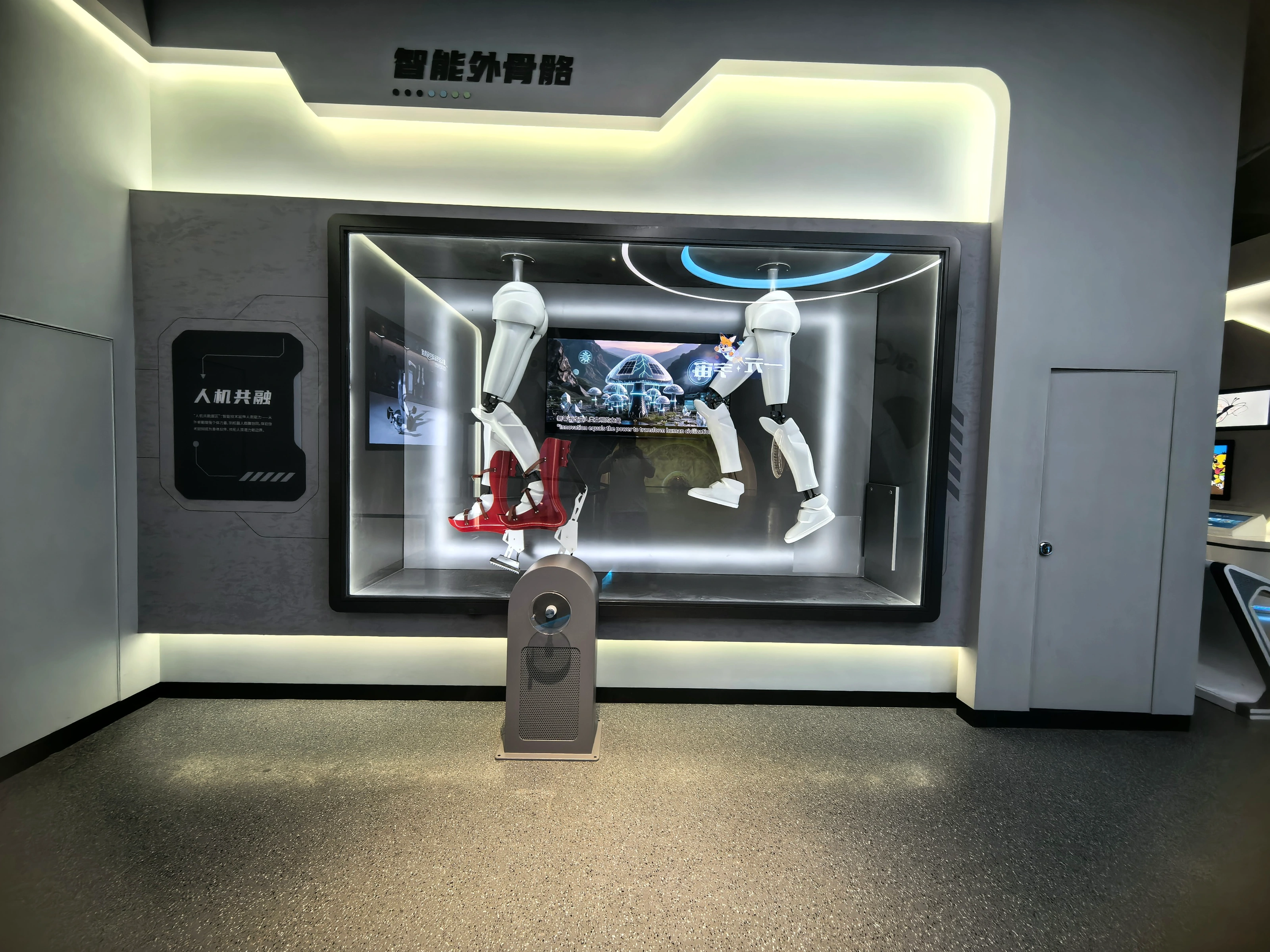
Exoskeleton science exhibit — front project photograph in the documented project configuration

Robotics & human motion

Exoskeleton science exhibit

Explore human movement through a museum exhibit with articulated leg models, a visitor handwheel and screen-based interpretation. Discuss a version for your science gallery.

▶ Watch the film
30 sec · Real operating video

THE PRODUCT IN MOTION

See it work.

The film begins with the installed display and the handwheel area, then returns to a wider view of the leg models moving through different joint positions.

Video & text guide

THE ACTIVITY & MECHANISM

Explore joint movement with a handwheel

A visitor handwheel operates an enclosed display of articulated leg models. Visitors can compare joint movement and brace positions with the accompanying screen explanation. Wearable assistance and a measured change in human strength are not demonstrated.

  1. 01

    The installed exhibit

    The glazed display, supporting screen and visitor handwheel are visible in the gallery.

  2. 02

    The handwheel area

    The camera moves closer to the handwheel pedestal and the red brace components before returning to the full display.

  3. 03

    Leg-model movement

    The articulated leg models change position inside the cabinet, making the joint movement visible.

Details to discuss
  • The leg joints and their changing positions
  • The relationship between the visitor handwheel and the display
  • How physical models and interpretation work together

REFERENCE & PROJECT SCOPE

Reference specifications.

Use the reference dimensions and operating information to plan the exhibit. The agreed project drawings define the supplied configuration, installation interfaces and service access.

L × W × H
2,200 × 1,100 × 2,200 mm
Exhibit theme
Robotics & human motion
Visitor activity
The installed exhibit · The handwheel area · Leg-model movement
Power & supply
Confirm whether this configuration requires power. Powered versions can be specified for 110/220 V AC and 50/60 Hz.
Configuration options
Appearance, interpretation language, controls and installation arrangement by project agreement
Daily operating schedule
8 hours per day
Scheduled maintenance
Every 30 days
Factory dispatch lead time
30–120 calendar days after design approval and receipt of the deposit. Transit time is additional.
Minimum custom order
One exhibit

Reference product dimensions in length × width × height order, including its base or cabinet where present. Allow additional installation and service clearances in the project layout.

Customisation, installation & support
01Learning theme
Choose the concepts visitors should explore, such as joint movement, mechanical support and the relationship between a person and a machine.
02Space & display
Share the gallery plan, sightlines and available height. Review the enclosure, model positions and access around the handwheel.
03Visitor controls
Agree the intended handwheel response, movement sequence and supporting interpretation before specifying the control system.
04Installation & support
Coordinate power, access for servicing, delivery responsibilities and the long-term support needed for your setting.
See the design-to-delivery process

BEFORE AN ENQUIRY

Questions & support.

24 months of complimentary spare-parts support, remote technical guidance and long-term after-sales support. Exhibit Engineers pays the shipping cost of complimentary spare parts during the 24-month support period.

Explore the support
Delivery, installation & after-sales terms
Payment
A 50% deposit is payable after the contract is signed. The remaining balance is paid after acceptance and before dispatch, so full payment is received before dispatch. Payment methods are agreed in the contract.
Packaging & transport
Metal shipping cases or multilayer wood-panel shipping cases. Transport arrangements and costs are agreed to suit the project.
Materials & painted finish
Common material options include Q235 steel, stainless steel, aluminium alloy, PVC, acrylic, engineering plastics. The combination is selected for each configuration. Marine anti-corrosion paint with a piano-gloss automotive paint finish. Applied to painted parts.
Typical power · powered versions
Standard products: 100–500 W; oversized installations: 1,000–5,000 W. Typical ranges for powered versions. Confirm the selected model and final connected load.
Product maintenance
Agree cleaning, control checks and inspection of accessible parts for the supplied configuration.
Installation & training
Complimentary training is available on site or remotely, according to project needs. If installation or on-site after-sales service is not included in the product price, the customer pays the actual travel expenses incurred, unless the contract provides otherwise.
Factory acceptance & handover
Mid-production and pre-dispatch checks are provided. Factory acceptance can take place in person at the factory or through acceptance videos. Installation and operating videos, written installation and operating instructions, drawings and a spare-parts list are provided.
Complimentary parts
24 months of complimentary spare-parts support, starting when the exhibit is handed over for use. Covers faults not caused by the user. User-caused or deliberate damage is excluded. Exhibit Engineers pays the shipping cost of complimentary spare parts during the 24-month support period.
Warranty & repair labour
The whole-exhibit warranty period and repair labour scope and charges are agreed in the contract.

Can we discuss a prototype or sample for a custom version?

Yes. Prototype testing and sample fabrication are available for custom projects. Discuss which functions or features you need to review for your version. The scope, cost and schedule are agreed for the project.

How prototype testing & samples work
What does this installation show?

A visitor handwheel operates an enclosed display of articulated leg models. Changing joint positions give the accompanying screen interpretation a visible physical reference. The model supports comparison of linked movements and brace positions, while the source does not demonstrate wearable assistance or a measured change in human strength.

What does this exhibit show?

The photographed installation presents moving leg models in a fixed display cabinet, with a visitor handwheel and a supporting screen. It provides a physical way to introduce joint movement and exoskeleton principles.

Can the exhibit be adapted for our science gallery?

The model scale, interpretation, enclosure and visitor control approach can be developed for the agreed learning theme and site. Share your audience, available space and preferred experience.

What do the images and videos show?

The gallery labels photographs, video frames, renderings and the dimension drawing. Physical footage is identified separately.

FROM CONCEPT TO TURNKEY DELIVERY

Start with a reference. Shape your version.

Share the exhibit name, intended users and a plan or description of your setting. We can work through the experience and practical scope.

START WITH YOUR IDEA

Tell us about your project.

Start with what you have: an idea, a sketch, a reference video or a procurement brief.

Review your message before opening WhatsApp. You can attach drawings or reference videos there.

SAVE YOUR PROJECT REFERENCES

Your selected exhibits.

1 · Select2 · Project3 · Verify & download

Save the exhibits you like, then choose up to 20 products for one complimentary PDF. Your saved list stays in this browser.

Start with an exhibit you like.

Choose “Save” on a product card or product page. Return here to prepare your collection.

Browse products ↗
0 / 20 selected

Need more information?

WhatsApp +86 13881436360 ↗[email protected]