Make a mechanism understandable
Use visible movement to support a conversation about mechanical relationships. Define the science topic and the action or observation that helps explain it.

SCIENCE EXHIBITS
Develop physical exhibits around a science theme, a visitor action and the practical needs of your team.
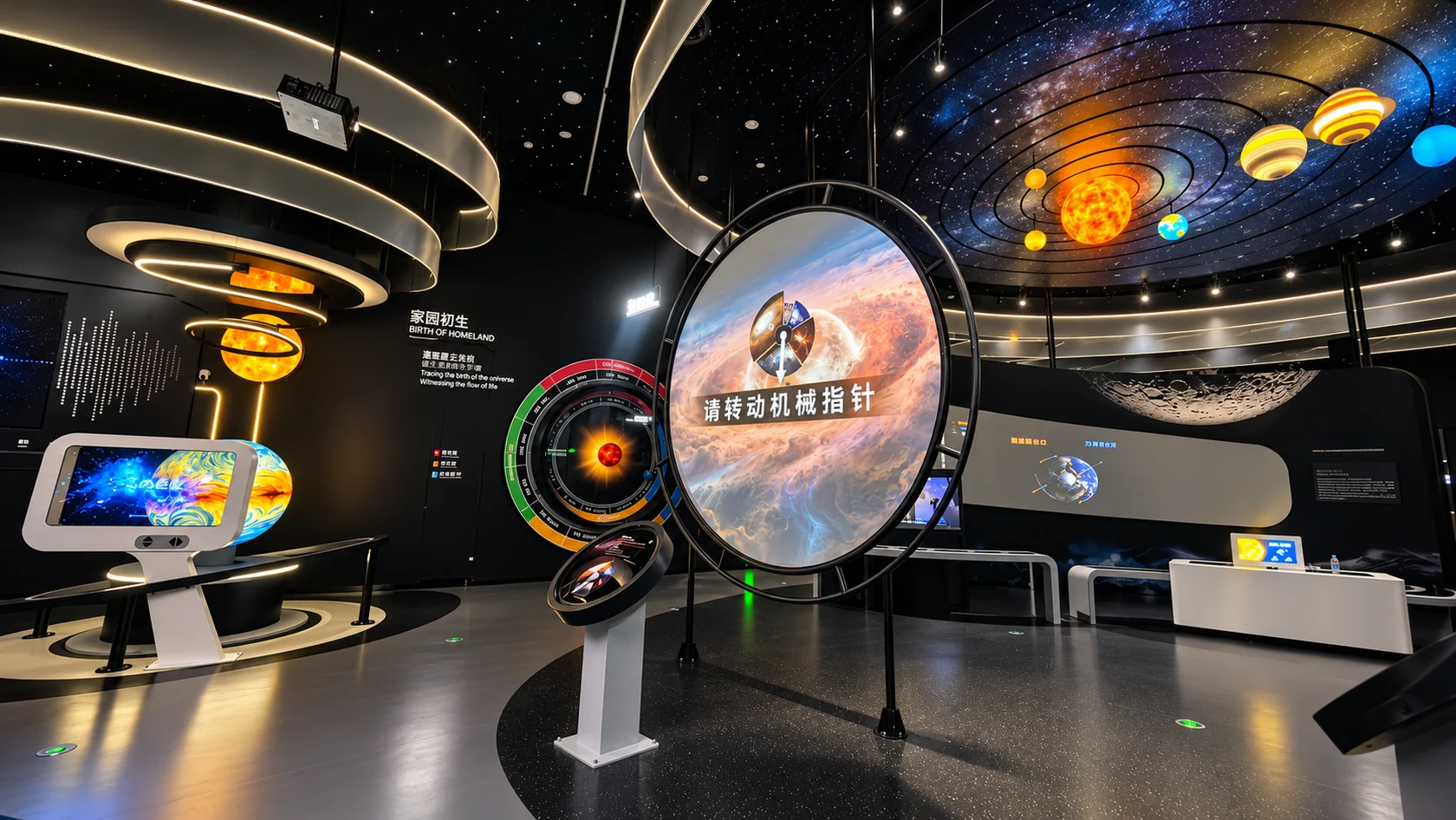
START WITH THE EXPERIENCE
Bring an exhibit brief, a gallery plan or a reference interaction. We can begin with the intended experience and work through the engineering.
Use visible movement to support a conversation about mechanical relationships. Define the science topic and the action or observation that helps explain it.
A robotic-fish demonstration offers a starting point for discussing tail movement and swimming. Plan the interpretation, pool setting and operating role together.
Relate each physical installation to the wider story, the viewing positions and the way visitors move through the science center.
WORKING EXAMPLES
▷ 30 sec video
Kinetic sculpture
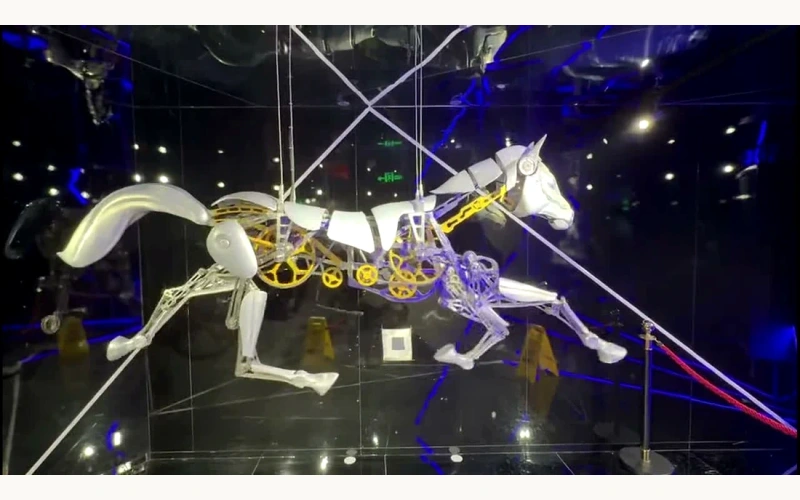
An articulated horse sculpture shows coordinated leg, body and tail movement in gallery demonstrations and workshop motion tests.
Product photograph · Real operating video
▷ 13 sec video
Kinetic sculpture
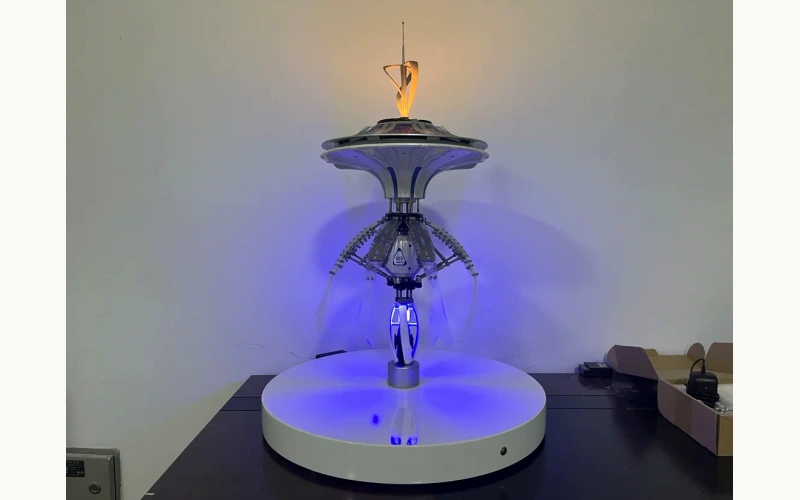
An exposed mechanical linkage moves a jellyfish sculpture above its illuminated base, combining physical motion with blue light.
Product photograph · Real operating video
THE SETTING AND DAILY USE
Bring what is known about the venue. Mark the conditions that still need to be checked.
Use the exhibit brief checklistFROM CONCEPT TO TURNKEY DELIVERY
Tell us about the audience, intended interaction and available space. A reference or an early concept can start the conversation.